How to Rank in ChatGPT: What Actually Gets You Cited

Artificial Intelligence
September 25, 2026
Ahrefs recently pulled 83,670 citations straight out of ChatGPT, Claude, and Perplexity to see what these tools actually reach for when they answer a question — and keyword targeting barely showed up as a factor at all.

That single finding explains why plenty of well-optimized websites are quietly missing from AI answers while thinner, less "SEO'd" competitors get quoted by name.
So here's the direct answer before anything else: you don't rank in ChatGPT by targeting a keyword. You rank by becoming a source its retrieval system trusts enough to fetch and clear enough to quote. That means showing up consistently across the web as a recognizable entity, answering the exact question a reader is likely to ask within the first few sentences of a page, and giving the model something structured enough — a clear claim, a labeled statistic, a tight definition — to lift cleanly into a generated answer. Traditional SEO still matters here, because ChatGPT still has to find your page through a search index before it can ever cite it. Indexing is step one of three, not the whole game.
This broader shift has a name: generative engine optimization (GEO) is the practice of structuring content so AI systems like ChatGPT, Perplexity, and Google's AI Overviews can retrieve, understand, and cite it inside a generated answer, instead of only ranking it on a results page. If you've already read our GEO roadmap, consider this the ChatGPT-specific deep dive on top of that foundation.
Why This Is Worth Taking Seriously Right Now
ChatGPT's user base has grown into the hundreds of millions of weekly active users, and a meaningful share of them are asking exactly the kind of product, service, and how-to questions that used to start with a Google search. That shift is still small as a percentage of total web traffic for most sites, but it's growing month over month, and early movers are building a lead that gets harder to close the longer they hold it. Brands that show up consistently when ChatGPT answers a category question get a kind of quiet endorsement no ad can buy — the model isn't recommending you because you paid for placement, it's naming you because independent sources across the web agree you're a credible answer.
That's also why this guide leans so heavily on mechanics rather than tactics you can copy and paste. The brands that will still be visible a year from now are the ones that understood why ChatGPT cites what it cites, not the ones that reverse-engineered a trick that stopped working the next time the retrieval system changed. Retrieval models get updated quietly and often, and a tactic built purely to exploit one specific quirk of how the system worked last quarter tends to have a short shelf life.
What ChatGPT Actually Is (and Isn't)
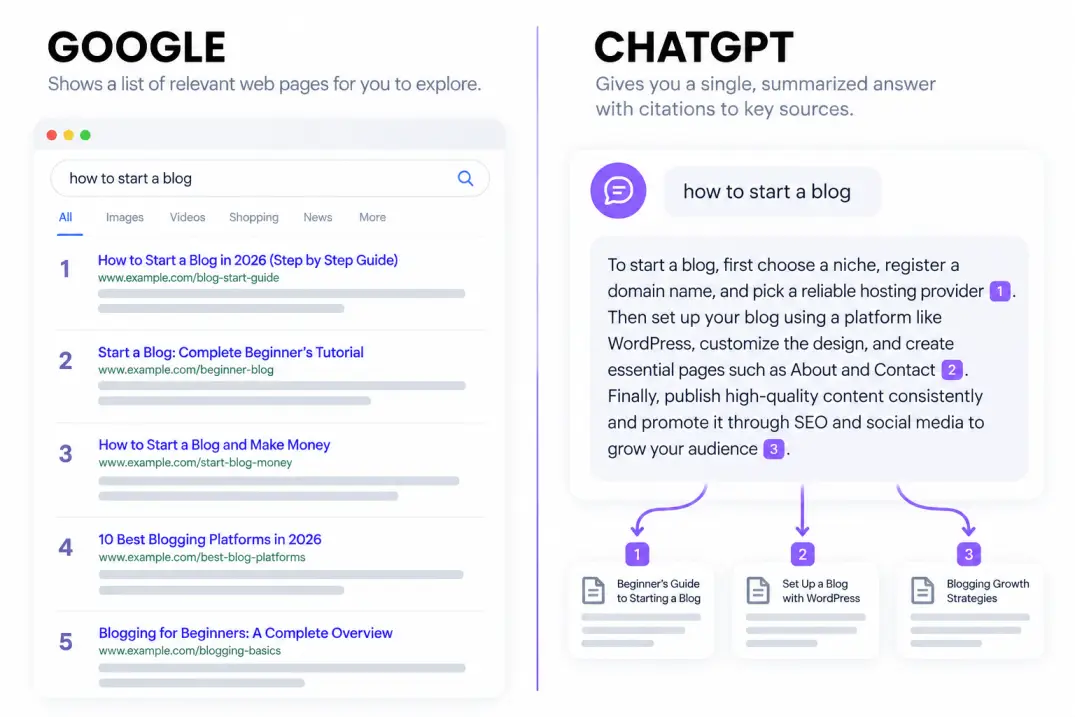
ChatGPT isn't a search engine that stores an index of the web the way Google does. It's a large language model — a system trained to predict the next word in a sequence, based on patterns learned from an enormous amount of text. When it "answers" you, it isn't looking something up in a database of ranked pages. It's generating a response, word by word, based on what it learned during training and, increasingly, on what it retrieves live from the web while you're talking to it.
That distinction matters more than almost anything else in this guide. Google ranks pages. ChatGPT selects sources. Those are two different games with two different scoreboards, and most of the confusion around "ranking" in ChatGPT comes from applying Google's rulebook to a system that was never built to use one.
How ChatGPT Actually Generates an Answer
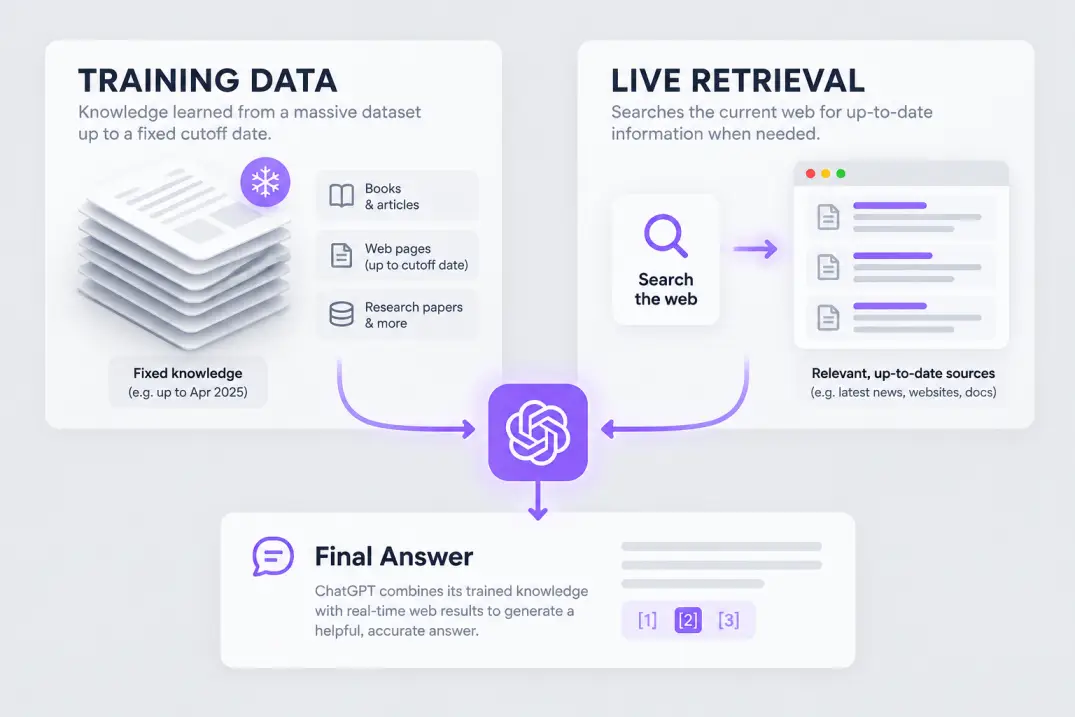
Under the hood, ChatGPT works off two separate layers of information, and knowing which layer you're competing in changes your whole strategy.
Layer one: training data. This is the frozen knowledge baked into the model during training — a massive snapshot of text (web pages, books, forums, YouTube transcripts, and more) up to a certain cutoff date. If your brand, product, or ideas showed up often enough and clearly enough in that training corpus, the model has some baked-in familiarity with you already, independent of any live search.
Layer two: live retrieval. For anything time-sensitive, specific, or outside its training knowledge, ChatGPT fires off a real web search behind the scenes, pulls back a set of candidate pages, and uses some of that content — sometimes with a citation, sometimes just as background context — to shape its answer. This is the layer most content teams can actually influence in the short term, and it's where most of the tactical work in this guide lives.
Once you separate those two layers, the practical question — how to rank in ChatGPT search specifically, as opposed to just existing somewhere in its training data — gets a lot more concrete. It becomes a retrieval-and-citation problem, not a keyword-density problem.
How ChatGPT Search Actually Works
When ChatGPT decides a question needs fresh information, it doesn't crawl the web itself. ChatGPT's web search functionality runs on Bing's search index, so Bing's crawling, indexing, and ranking signals directly shape what ChatGPT is even capable of finding. If a page isn't indexed by Bing, or performs poorly there, it's far less likely to ever reach ChatGPT's retrieval step — no matter how well it's written.
From there, ChatGPT fetches a batch of candidate pages for a given query, skims them for relevant passages, and decides what to fold into its answer. This is why some genuinely excellent content never gets cited: it's never fetched in the first place, usually because of weak Bing visibility, blocked crawlers, or a site structure that buries the actual answer under layers of navigation and fluff.
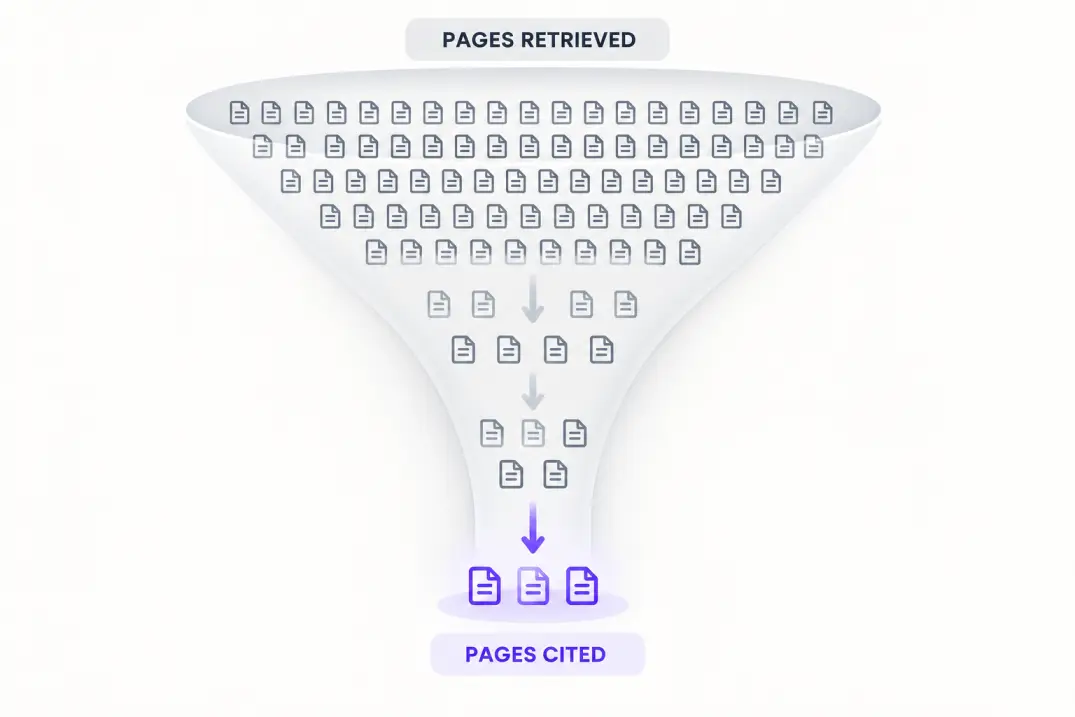
Here's the part that surprises most marketers: being retrieved and being cited are two different outcomes. ChatGPT often pulls in far more pages than it ends up naming. Some become invisible background context that shapes the answer's phrasing without ever appearing as a link. Others get named directly, with an inline citation the user can click. Only the second group delivers traceable visibility — so the real optimization target isn't "get found," it's "get named."
Picture it like a reporter working on a deadline: they'll skim a dozen sources to get background on a story, but they'll only name two or three of them in the finished article — usually the ones that stated something clearly enough to quote directly, and that the reporter trusted enough to put their own name next to. ChatGPT's citation behavior works on roughly the same logic.
It's also worth separating ChatGPT from Google's AI Overviews, since people often lump them together. AI Overviews sit on top of Google's own index and its decades of ranking signals, so a page that already ranks well organically has a real head start there. ChatGPT's retrieval layer runs on Bing instead, and leans more heavily on entity consensus than on classic ranking signals like backlink profiles. A page can rank on page one of Google and still never get cited by ChatGPT, and the reverse happens just as often.
Does ChatGPT Even Have "Rankings"?
Not in the way Google does, and this is where a lot of guides quietly mislead people. There's no dashboard showing your ChatGPT ranking the way Search Console shows your average position for a keyword. Ask ChatGPT the same question ten times and you can get ten slightly different answers, with different sources cited each time — its outputs are probabilistic, not fixed.
That doesn't mean visibility is random, though. If you're chasing ChatGPT rankings the way you chased a fixed page-one Google spot, you're solving the wrong problem. What you're actually optimizing for is citation frequency — how often, across many possible phrasings of a question, your brand or page shows up as one of the sources ChatGPT reaches for. Brands trying to rank on ChatGPT get further, faster, once they stop looking for a stable "position" and start tracking how consistently they get named across a spread of related prompts, not just one exact phrase.
This also explains why a small, focused site can occasionally out-cite a much bigger competitor: consistency and clarity across a narrow topic often beat sheer domain size, since the model is weighing how confidently it can attribute a specific claim to you — not how many pages your site happens to have.
The ChatGPT Ranking Factors That Actually Matter
Forget domain age and exact-match anchor text. The signals that correlate with ChatGPT visibility look different from classic SEO, even though a few old favorites carry over in a modified form.
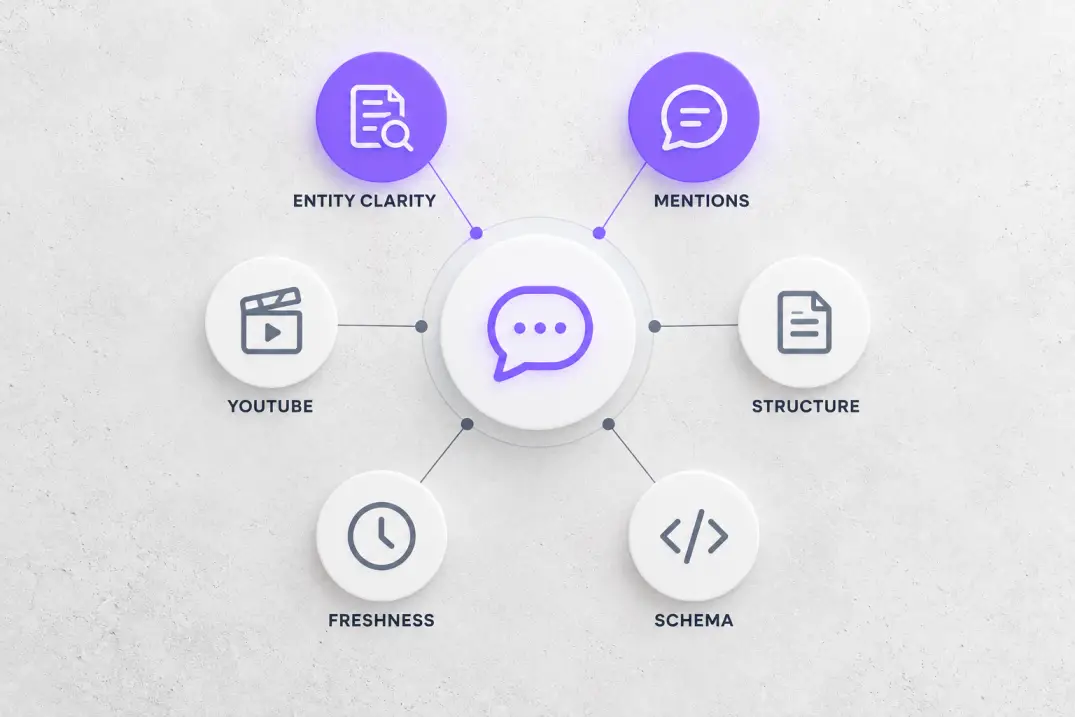
| Factor | Why It Matters to ChatGPT |
|---|---|
| Entity clarity | The model needs to know clearly who you are and what you do, consistently, across many sources |
| Third-party mentions | Unlinked brand mentions across the web build the "consensus" large language models look for |
| YouTube presence | Video transcripts are a heavily weighted training and citation source |
| Direct-answer structure | Content that states the answer plainly, early, is easier for the model to extract |
| Freshness signals | Dated, genuinely updated content is favored for time-sensitive questions |
| Structured data | Schema markup helps machines parse who, what, and when, with less ambiguity |
| Bing indexability | No index presence, no retrieval, no citation — full stop |
OpenAI trained GPT-4 on more than a million hours of YouTube video transcripts, according to reporting from The New York Times — which is part of why brand mentions inside YouTube videos correlate so strongly with ChatGPT visibility today.
That YouTube connection deserves its own callout, because it's consistently one of the strongest single predictors researchers have found. In one large-scale citation study, YouTube mentions and mention impressions showed the strongest correlation with ChatGPT visibility, outperforming every other factor measured, including Domain Rating and backlink counts. Two forces are driving that: YouTube transcripts make up a large share of the data language models were trained on, and because ChatGPT can't generate video content itself, it tends to lean on YouTube whenever a prompt calls for that kind of explanation.
Practically, that means getting your brand mentioned — by name, in the title, description, or spoken transcript — inside relevant YouTube videos is now a legitimate visibility channel for AI search, not just a nice-to-have for video marketers. It doesn't have to be your own channel, either: a mention inside someone else's well-watched explainer video counts too, which is why creator partnerships have quietly become part of some brands' AI-search strategy.
Here's a short breakdown that walks through exactly this dynamic, with real before-and-after citation examples:
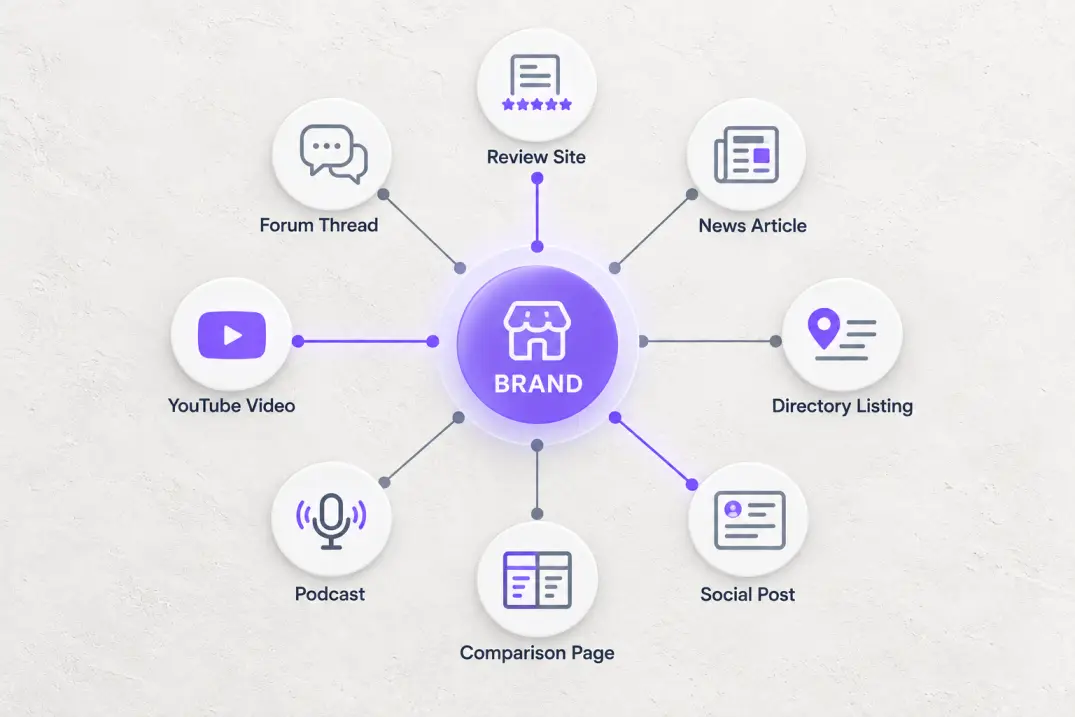
The rest of the factors in the table above matter almost as much, and they compound. A page can be Bing-indexed, well-structured, and still rarely get cited if the brand behind it never shows up anywhere else online — because ChatGPT is, at its core, looking for agreement across independent sources, not just one well-optimized page.
Not every mention carries equal weight
It helps to think of sources in rough tiers. At the top sit large, well-established publications and reference sites a model has learned to trust repeatedly across many different topics. In the middle sit respected niche publications, industry newsletters, and established review or comparison sites within your specific category — this is where most brands realistically have the best shot at earning a mention. At the bottom sit low-effort directories and thin aggregator sites that add little to a model's confidence, even when they technically mention your name. A handful of mid-tier, category-relevant mentions usually does more for ChatGPT visibility than dozens of low-value directory listings, so it's worth being selective about where you spend outreach effort rather than chasing volume alone.
Building the Signals ChatGPT Actually Trusts
Entity consistency across the web
Large language models resolve brands and people as entities — bundles of facts tied to a name, similar to how a knowledge graph works. If your business name, description, and key facts are written five different ways across your own site, your directory listings, and your press mentions, you're making the model's job harder, and uncertain entities get cited less often. Keep your name, description, and core claims worded the same way everywhere they appear — your homepage, your About page, your social bios, and any third-party listing you control.
This is the same discipline local SEO practitioners have preached for years under the name NAP consistency (name, address, phone), just extended to every fact a language model might try to verify. If your founding year, headquarters, or core product description shifts depending on which page a model happens to read, that inconsistency becomes a reason to hedge on citing you at all, or to cite a competitor whose story holds together more cleanly.
Structured data the model can actually parse
A clean, uncluttered page — free of heavy client-side rendering that hides content from first paint — is easier for retrieval systems to parse and trust. Schema markup reinforces that by explicitly labeling what a page is about. A simple example, for an FAQ-style page:
{
  "@context": "https://schema.org",
  "@type": "FAQPage",
  "mainEntity": [{
    "@type": "Question",
    "name": "How do I rank in ChatGPT?",
    "acceptedAnswer": {
      "@type": "Answer",
      "text": "By earning consistent third-party mentions, structuring content to answer questions directly, and staying indexable in Bing."
    }
  }]
}
This won't magically guarantee a citation, but it removes ambiguity — and ambiguity is exactly what gets a page skipped in favor of a clearer competitor. If you want the deeper mechanics of how structured data feeds AI retrieval, our breakdown of schema markup for AI search goes further into JSON-LD patterns that consistently get picked up.
Freshness, without faking it
For anything time-sensitive — pricing, statistics, "best of" comparisons — ChatGPT's live retrieval layer leans toward content with visible, honest freshness signals: a real "last updated" date, current-year references, and data that hasn't gone stale. Slapping a fake "updated" date on unchanged content is easy to spot once a model cross-references your claims against more recent sources, and it tends to backfire by making every other claim on the page look less trustworthy too.
Answer-first formatting, applied ruthlessly
Every section of a page that's trying to earn a citation should be able to stand alone. Open with the direct answer, then support it — not the other way around. Long throat-clearing introductions before the actual point bury exactly the sentence a model is trying to extract, which is the single easiest fix most sites are still ignoring. This is the same principle behind writing genuinely helpful content in the first place, not a trick reserved for AI — it just happens to matter more now that a machine is doing the skimming.
How to Rank on ChatGPT: A Step-by-Step Playbook
Put the factors above into a sequence, and here's roughly what it looks like in practice.
1. Get indexed properly — in Bing, not just Google. Submit your sitemap to Bing Webmaster Tools, confirm your key pages aren't blocked by robots.txt for Bing's crawler, and check that your site renders fully without heavy client-side JavaScript hiding the content from a fast crawl.
2. Rewrite your openings to answer first. For every important page, ask: if someone lifted only the first two sentences, would it stand alone as a correct, complete answer? If not, rewrite it before you touch anything else on the page.
3. Build genuine third-party mentions. Pitch relevant publications, get listed in comparison roundups in your niche, and show up in forums and communities where your category gets discussed. Unlinked mentions still count — LLMs are reading the web for consensus, not just backlinks.
4. Publish on YouTube, even briefly. A short explainer video that states your brand name and core claim clearly in the title, description, and spoken transcript gives the model something concrete to learn from and cite later.
5. Add structured data to your key pages. FAQ schema, Article schema, and Organization schema all reduce ambiguity for both search engines and AI retrieval systems at once.
6. Go deeper than the obvious answer. Pages that only restate the question in different words rarely get cited over a source that adds a genuinely new detail, number, or distinction. This is the same information-gain principle that separates pages Google rewards from pages it quietly ignores.
7. Write for follow-up questions, not just the headline one. Real ChatGPT conversations rarely stop at one exchange. If your page also answers the two or three natural follow-up questions a reader would ask next — pricing nuances, common objections, edge cases — you give the model material to draw on for the rest of that conversation too, not just the opening question.
8. Keep a real content refresh cadence. Revisit stats-heavy or comparison pages regularly, and make the updates real, not cosmetic.
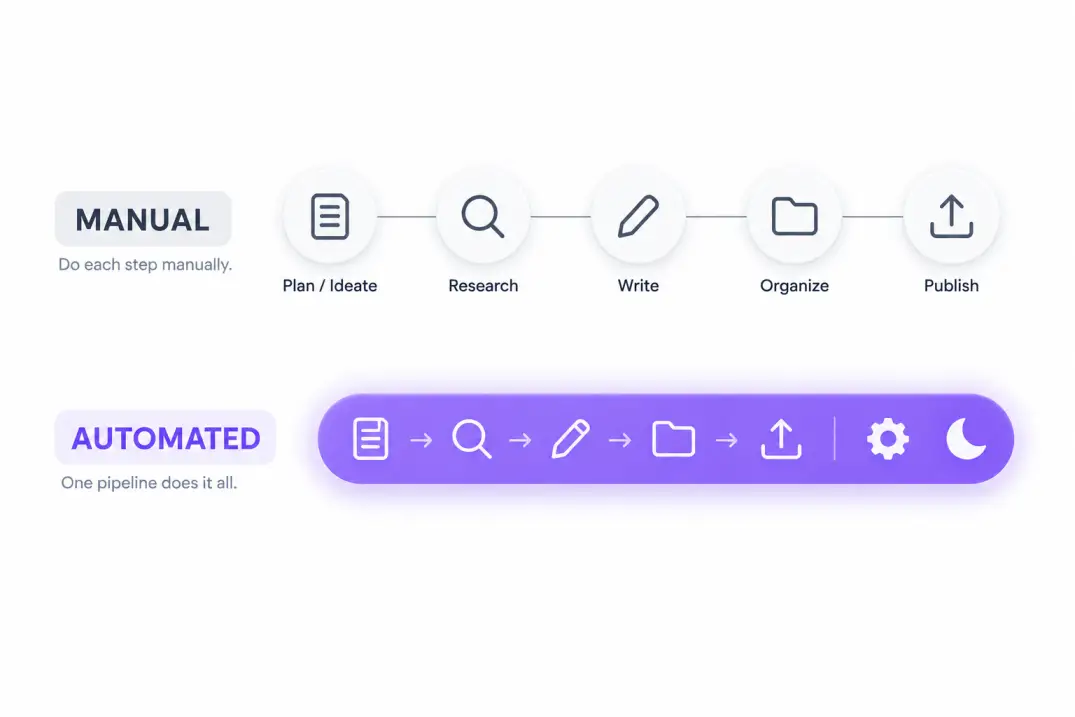
Doing all seven of these consistently, across dozens or hundreds of pages, is a lot of ongoing manual work — which is exactly the kind of workflow that's started getting automated. Qoreta, for example, runs this type of research-to-publish pipeline on autopilot: finding relevant angles in a niche, drafting structured, answer-first content with citations and internal links already in place, and publishing it without someone manually shepherding every step — which is one practical way sites are keeping pace with how often this kind of content needs to be produced and refreshed.
The common thread across every step is patience. Unlike a Google ranking, which can visibly move within days of a change, ChatGPT's training-data layer only updates on OpenAI's own schedule, and even the live retrieval layer takes time to start favoring a source consistently. Treat this as a months-long consensus-building project, not a quick win you can check off in a sprint.
Common Mistakes That Keep Brands Invisible in ChatGPT
Chasing a single "money page." Classic SEO trains people to obsess over one landing page per keyword. AI retrieval rewards breadth instead — the more places your brand gets mentioned accurately across the web, the more consensus the model has to draw on when your category comes up.
Treating this like a copy of Google SEO. Stuffing keywords into headers and meta tags while ignoring off-site mentions is one of the most common and least effective strategies teams try first. ChatGPT doesn't care about keyword density; it cares whether independent sources agree on the facts.
Ignoring Bing entirely. Plenty of sites are meticulously optimized for Google and have never once checked their Bing Webmaster Tools account. Since ChatGPT's live search runs on Bing's index, that gap quietly caps your visibility before content quality even enters the picture.
Burying the answer under a long introduction. A well-researched page can still get skipped if the actual answer doesn't appear until paragraph six. Retrieval systems favor extractable, self-contained claims near the top of a page, not the bottom.
Faking freshness. Changing a date stamp without changing the content is easy for a model to catch once it cross-references your numbers against more current sources found elsewhere on the same topic.
Writing only for the model, not the human reading afterward. It's tempting to over-engineer a page purely to be extractable, but a page that reads like a checklist for a machine, with no real voice or context, tends to earn fewer of the genuine third-party mentions that drive citations in the first place. People still have to want to link to, quote, or recommend the page before a model ever sees that consensus building around it.
- ChatGPT selects and cites sources — it doesn't rank pages on a results page the way Google does
- Being retrieved and being cited are different outcomes; structure content to earn the second one
- Bing indexability is a hard prerequisite, since ChatGPT's live search runs on Bing's index
- YouTube mentions show an unusually strong correlation with ChatGPT visibility
- Consistent entity details and third-party mentions matter more than backlinks alone
How to Track and Measure Your ChatGPT Visibility
There's no built-in analytics dashboard for this yet, so most teams stitch together a few approaches:
- Manual prompt testing. Run the same 10-20 questions your buyers would realistically ask, on a regular schedule, and log which brands and sources get cited each time.
- Referral traffic segmentation. Filter your analytics for sessions where the referrer includes chatgpt.com — this shows real, if still modest, direct traffic arriving from AI answers.
- Dedicated AI-visibility tools. A newer category of software runs large batches of prompts against ChatGPT, Perplexity, and Gemini simultaneously and tracks citation share over time, similar to a rank tracker but built for AI answers instead of blue links.
None of these are perfect substitutes for Search Console-style precision, but tracking the trend direction over months tells you far more than any single snapshot. Google Search Console and GA4 still matter here too, indirectly — since Bing and Google often crawl and reward similar underlying signals, a page climbing in Google impressions is frequently a page that's also becoming easier for Bing, and therefore ChatGPT, to find and trust.
It's worth setting realistic expectations before you start measuring, too. Referral traffic from chatgpt.com is still a small fraction of most sites' overall sessions, even for brands doing everything right, simply because far more total queries still run through traditional search. The goal in tracking this isn't to see AI referral traffic overtake Google any time soon — it's to confirm the trend line is moving up, and to catch early whether your GEO work is actually landing before you scale the effort further. If you want a fuller framework for choosing which of these metrics to prioritize, our guide to AI search visibility metrics and KPIs walks through the tracking side in more depth.
ChatGPT vs. Google vs. Perplexity, at a Glance
| ChatGPT | Perplexity | ||
|---|---|---|---|
| Output format | Ranked list of links | Synthesized answer with citations | Synthesized answer with citations |
| Index source | Google's own crawler | Bing's index, for live search | Its own retrieval layer |
| "Ranking" concept | Fixed position per query | Probabilistic citation frequency | Probabilistic citation frequency |
| Best single lever | Backlinks and on-page relevance | Entity consensus and structure | Freshness and source diversity |
They overlap more than they differ. A page that's genuinely well-structured, clearly attributed, and backed by real third-party mentions tends to perform across all three, because all three are ultimately looking for the same underlying signal: can this source be trusted to answer the question correctly?
Where This Leaves You
Ranking in ChatGPT isn't a hack you apply once. It's closer to old-fashioned PR than modern SEO — you're trying to get a consistent, accurate, well-documented version of your brand repeated across enough credible sources that a language model has no reason to doubt it.
Start narrow: pick five pages that answer real questions your buyers ask, tighten the openings so they stand alone, add clean schema, and make sure Bing can actually see them. Then widen out — mentions, YouTube, comparison roundups — over the following months. If your team is already stretched thin publishing for Google, the same content backbone (structured, cited, answer-first) works for both, so you're not building two separate content strategies from scratch.
It also helps to accept, early, that some of this work won't show up in any dashboard for months. A mention in a niche forum thread or a comparison article rarely moves a traffic chart the week it goes live, but it's exactly the kind of independent corroboration that compounds into consistent citations later. Treat the absence of an immediate spike as normal, not as a sign the approach isn't working.
The web is genuinely getting a second front door. Whether your brand walks through it comes down to whether the internet, as a whole, can vouch for you.
Artificial Intelligence
Intelligence without limits.
We believe great content deserves honest authorship—even when it's AI.
Frequently Asked Questions
Focus on narrow, specific topics where you can become the clearest single source rather than competing broadly. Answer a handful of exact questions your buyers ask better than anyone else has, get those pages indexed in Bing, and pick up even a few genuine third-party mentions in niche communities or comparison articles. Consistency on a narrow topic often outweighs sheer domain size.
Live retrieval citations can appear within weeks once a page is properly indexed in Bing and structured to answer questions directly. Showing up consistently, and eventually influencing the model's training-data layer, is a much longer process, typically measured in months, since it depends on OpenAI's own training and update schedule.
Some overlap, but the priorities are different. Both reward clear, well-structured, trustworthy content, but ChatGPT weighs entity consistency and third-party mentions across the web much more heavily than backlinks or exact-match keywords, and it depends on Bing's index for live retrieval rather than Google's.
Yes, at least at a basic level. Submit your sitemap to Bing Webmaster Tools, verify your key pages aren't blocked for Bing's crawler, and confirm your content renders fully without relying on heavy client-side JavaScript. Since ChatGPT's live search runs on Bing's index, poor Bing visibility puts a hard ceiling on your ChatGPT citations regardless of how well you rank on Google.
By being unambiguous on a specific claim or topic. Language models favor sources they can confidently attribute a fact to, and a focused small site with consistent entity details often reads as more trustworthy on its niche topic than a sprawling large site that covers the same ground vaguely.
It usually comes down to consensus and clarity. If your competitor is mentioned more consistently across independent sources, or states their claims more directly near the top of their pages, the model has an easier time trusting and extracting their answer over yours, even if your content is technically more thorough.
Not in the same precise way, because ChatGPT's outputs are probabilistic rather than fixed. The closest equivalent is running a consistent set of prompts regularly and tracking how often your brand or page gets cited across them, or using an AI-visibility tool built specifically for this kind of citation tracking.
Not directly. Research has found close to zero correlation between raw content length and AI citations. What matters more is whether the content states a clear, extractable answer early, backed by specific details, rather than how many words surround it.
It's not strictly required, but it meaningfully reduces ambiguity for retrieval systems trying to parse what a page is about. FAQ, Article, and Organization schema are the most broadly useful types for AI-search visibility, alongside their usual SEO benefits.
Video transcripts made up a significant share of the data large language models were trained on, so brand mentions inside YouTube videos become part of what the model has learned. YouTube content also tends to get retrieved when a prompt calls for the kind of explanation ChatGPT itself can't produce natively, such as a demonstration or tutorial.
No. Google still drives far more traffic for most sites today, and the same content backbone (clear structure, direct answers, genuine authority) benefits both. Treat ChatGPT visibility as an addition to your existing SEO work, not a replacement for it.
Commercial queries lean even more heavily on third-party validation, since a model is cautious about appearing to endorse a product based only on the seller's own claims. Genuine reviews, comparison articles, and independent mentions carry more weight here than on-page sales copy ever will.
Retrieval means ChatGPT's search layer pulled your page as a candidate source for a query. Citation means it actually named you or linked to you in the final answer. Many more pages get retrieved than cited, since some retrieved content only shapes the answer's wording in the background without credit.
Yes. Unlike traditional backlink-focused SEO, language models are reading the web for consensus about who you are and what you do, and an unlinked mention in a credible source still contributes to that consensus, even without a clickable link.
Revisit anything with statistics, pricing, or comparisons at least every few months, and make sure the changes are substantive, not just a cosmetic date change. For evergreen conceptual content, a review every six to twelve months is usually enough to keep it aligned with current information.
Yes, particularly for the repetitive parts of the workflow: finding relevant topics, drafting answer-first structured content, adding schema and citations, and publishing consistently. Manual execution of all of this across dozens of pages is time-consuming, which is why more teams are automating the research-to-publish pipeline rather than doing it page by page.