White Label SEO Services: Top 15 Agencies Compared

Artificial Intelligence
September 27, 2026
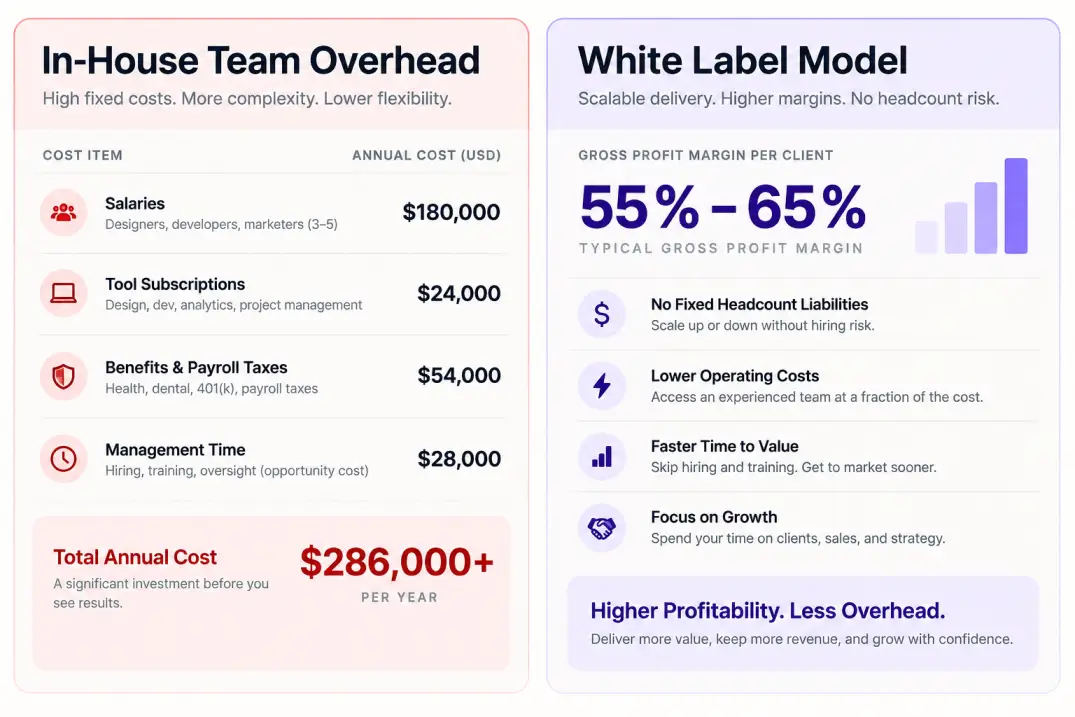
Building an in-house SEO fulfillment team can require a significant upfront investment. According to Discovered Labs, an internal AEO team can cost more than 250,000 dollars annually in salaries, with another 15,000 – 50,000 dollars in technology costs. The company also estimates a 3–4 month recruiting and onboarding period before the team is fully operational. For agencies facing unpredictable client demand, white label SEO can provide an alternative by turning much of that fixed operational cost into a variable fulfillment expense.

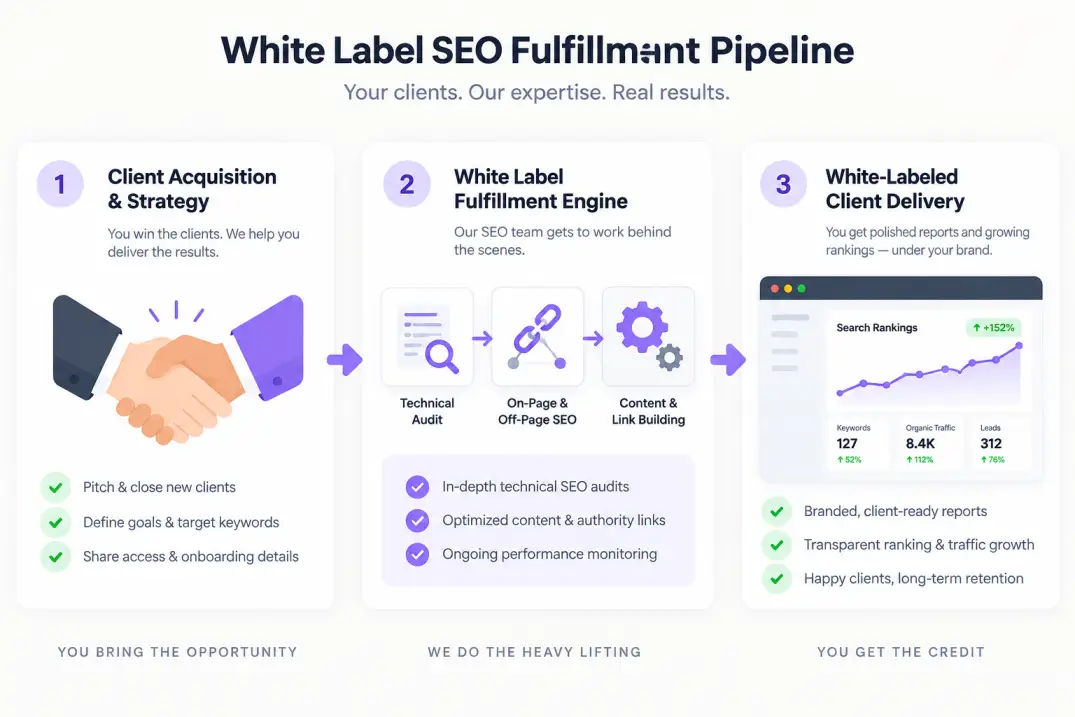
White label SEO services are specialized search engine optimization operations performed by a third-party provider that an agency rebrands and sells to its clients as its own work. Through this arrangement, the partner agency delivers technical audits, content strategies, backlink acquisition, and local citations behind the scenes, while your agency maintains the client contract, presentation layer, and billing margin.
**White Label SEO:** A business-to-business fulfillment model where a specialized provider executes complete search engine optimization deliverables, enabling marketing agencies to resell the work under their own branding without disclosing third-party involvement.
This fulfillment model allows agencies to transform variable client demand into steady recurring revenue without hiring a single internal analyst. Instead of turning down organic search retainers, you capture the revenue while specialized fulfillment teams handle the technical execution.
What Is White Label SEO and How Does It Work?
At its foundation, white labeling separates client acquisition from operational delivery. In traditional agency models, winning a new client requires expanding internal headcount, managing project bandwidth, and purchasing expensive software subscriptions.
When you partner with a white label provider, your agency acts as the strategic front end. Your account managers interface with the client, translate business goals into project scopes, and handle customer communication. Meanwhile, the white label partner functions as your silent production department.
| Operational Stage | Your Agency | White Label Partner |
|---|---|---|
| Client Intake & Sales | Gathers client brief, sets pricing, signs retainer contract | Provides unbranded pitch decks, proposal audits, and baseline projections |
| Technical Auditing | Approves audit scope and presents findings to client | Runs deep site crawls, identifies core technical debt, and prepares roadmaps |
| Execution & Production | Reviews deliverables against client brand guidelines | Writes content, builds links, optimizes metadata, and fixes schema markup |
| Performance Reporting | Conducts monthly review calls and delivers strategic advice | Generates automated, white-labeled PDF and interactive dashboard reports |
The entire process remains invisible to your client. Deliverables arrive with your agency’s logo, typography, and color scheme attached. Even technical changes are delivered as approved implementation guides or uploaded directly via delegated access protocols that protect your brand identity.
The Core Components of White Label Fulfillment
A comprehensive white label program covers every operational discipline required to move competitive search rankings:
- Technical Site Architecture: Resolving crawlability issues, canonical anomalies, core web vitals bottlenecks, and international indexing parameters.
- On-Page Optimization: Structuring header tags, matching search intent, refining internal link graphs, and optimizing metadata.
- Strategic Content Creation: Drafting long-form editorial articles, bottom-of-funnel service pages, and conversion-focused landing copy.
- High-Authority Link Building: Executing manual digital PR, editorial outreach, and niche placements to elevate domain authority.
- Local Search Infrastructure: Managing citations, optimizing Google Business Profiles, and monitoring local geo-grid visibility.
Mastering how to structure your outsourcing workflow is critical before committing to any vendor. As shown in the video above, establishing explicit Standard Operating Procedures (SOPs) determines whether your outsourced campaigns compound in value or suffer from quality decay.
Why Agencies Use White Label SEO: The Financial Math
The choice between building an in-house SEO department and partnering with a fulfillment provider comes down to operating leverage and risk management.
Hiring an internal team requires recruiting an SEO strategist (85,000/year), an outreach specialist (30,000/year). Add enterprise software stacks like Ahrefs, SEMrush, and crawling licenses, and your fixed annual burn easily exceeds $300,000 before landing a single client.
If two enterprise retainers churn simultaneously, an agency with heavy fixed payroll faces immediate cash flow distress. Conversely, utilizing white label SEO for agencies converts fixed salary liabilities into variable, margin-protected costs.
Never price your white-labeled offerings at cost-plus margins. Package fulfillment deliverables into strategic outcomes and maintain a minimum gross margin of 50% to 65% on every retainer.
Agency Profit Formula:
Client Retainer Fee ($3,500/mo) - Wholesale Fulfillment Cost ($1,200/mo) = Gross Profit Margin ($2,300/mo or 65.7%)
When a client retains your services for 1,000 and 2,100+ monthly gross profit while eliminating staffing headaches and operational bottlenecks.
This predictability is what enables modern agencies to scale from five clients to fifty without tripling administrative overhead. You can double down on positioning, client acquisition, and high-level strategy while specialized partners handle campaign execution.
The Four White Label SEO Delivery Models
Not every fulfillment provider operates the same way. Before signing a vendor contract, choose the delivery framework that matches your client management capacity:
1. Fully Anonymous (Backend Reselling)
In this standard model, the fulfillment partner never communicates with your client. You receive white-labeled documents, spreadsheets, and unbranded audit decks through a central partner portal. Your account managers present these assets directly to the client. This approach offers complete brand protection, though your team must possess enough SEO fluency to answer technical client questions.
2. Blended Client-Facing (Ghost Account Management)
Certain enterprise providers offer dedicated account managers who participate in client meetings using an @youragency.com email address. They represent themselves as your internal search optimization team, handling technical reviews and monthly check-ins directly. This structure drastically cuts your account management time, but requires absolute trust in the provider's professionalism.
3. Software and Platform-Driven
A growing number of agencies prefer using specialized white label seo software that automates keyword discovery, client reporting, and audit generation. Your in-house staff or generalist virtual assistants run the software, but the platform provides the white-labeled portal, automated rank tracking, and customer-facing interface.
4. Modular Component Outsourcing
Instead of handing off an entire campaign, you outsource discrete, time-intensive operational components—such as manual blogger outreach or custom digital PR—while handling keyword strategy and on-page implementation internally. This gives you granular control over client strategy while removing production bottlenecks.
For agencies producing substantial content volumes, scaling organic output manually often leads to quality bottlenecks. Many teams combine managed outsourcing with modern content engines like Qoreta to research, draft, and internally link high-intent articles automatically, allowing them to deliver consistent client campaigns without ballooning payroll.
Understanding White Label Local SEO Services
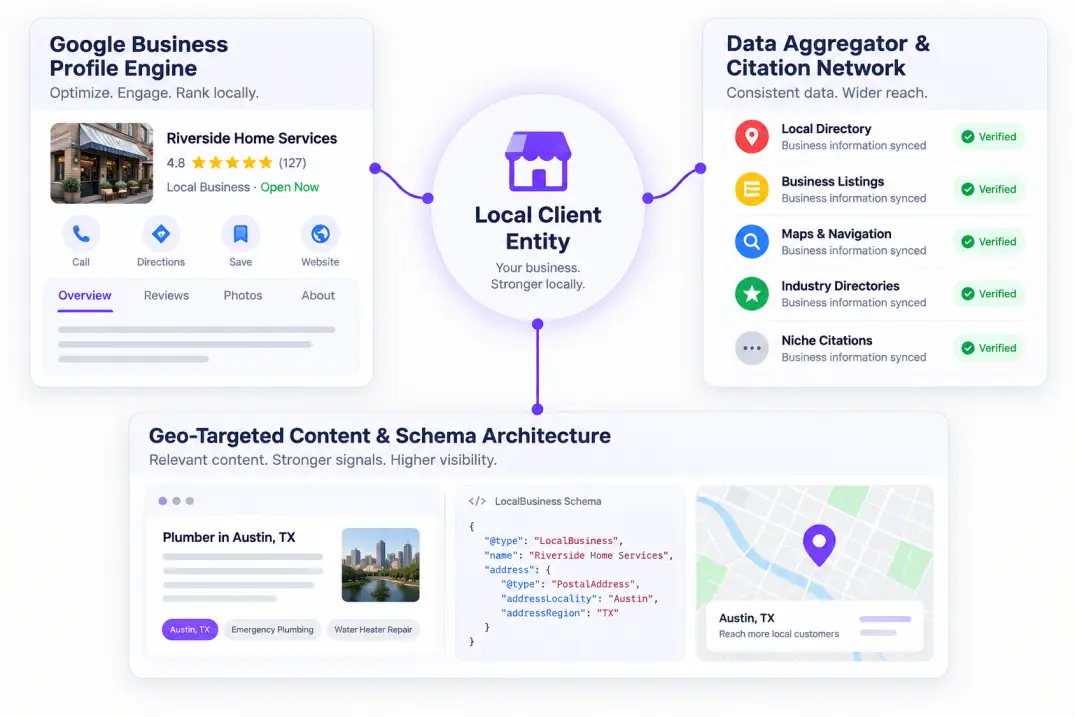
Managing regional service businesses and multi-location franchises demands a distinct operational playbook compared to national eCommerce campaigns. Investing in dedicated white label local seo services helps agencies tackle localized search intent without manual legwork.
Local search relies on three main ranking pillars:
- Google Business Profile (GBP) Optimization: Category selection, weekly posting, photo uploads, geo-tagging, and review response workflows.
- Local Citation Ecosystems: Consistent Name, Address, and Phone (NAP) syndication across major data aggregators like Data Axle and Localeze, paired with industry-specific directories.
- Proximity Signals and Local Content: Designing localized landing pages optimized for micro-regions, local schema markup, and neighborhood link acquisition.
Relying on automated software alone to clean up duplicate local citations often leads to data conflicts across aggregators. High-performing local SEO programs always use manual submission and verification protocols.
By leveraging an established white label local seo partner, you can roll out hundreds of geo-targeted citations and manage multi-location Google Business Profiles seamlessly, unlocking profitable local marketing retainers for your agency.
How to Vet a White Label SEO Provider: Red Flags vs. Green Flags
Choosing the wrong fulfillment partner can destroy client relationships your agency spent years building. Before signing a master services agreement, evaluate every vendor against these critical operational benchmarks:
Red Flags to Avoid
- Guaranteed Top 3 Rankings: Any provider promising guaranteed search positions is relying on manipulative, black-hat tactics or targeting meaningless zero-volume search terms that generate no revenue.
- Private Blog Networks (PBNs): Low-cost providers often build links through rented, expiring domain networks. While these may show short-term metric boosts, they eventually trigger algorithmic penalties that can de-index client websites.
- Opaque Reporting: If a vendor provides monthly spreadsheets showing vague 'optimization activities' without sharing live URLs for placed links or verified code changes, they are hiding low-quality execution.
- Long-Term Multi-Month Lock-ins: Avoid providers that demand six- to twelve-month commitments for basic reselling. Reputable partners earn retention through consistent campaign performance.
Green Flags to Demand
- Transparent Deliverable Tracking: You should have full visibility into live URLs, keyword movements, and technical tickets inside a unified white-label portal.
- Manual Outreach Processes: Backlinks should originate from genuine, contextually relevant websites with verifiable organic traffic—not link farms or sponsored directories.
- Native English Content Standards: Written assets must be well-researched, aligned with search intent, and free of grammatical errors or low-quality AI patterns.
- Customizable Brand Assets: The provider should supply unbranded sales decks, pitch templates, and automated client dashboards featuring your custom domain and color palette.
The step-by-step evaluation guide in the video above outlines how to vet potential agency partners before handing over your client accounts, ensuring your brand reputation remains protected.
The 15 Best White Label SEO Companies and Software Platforms
To help you choose the right partner for your agency's business model, we evaluated the market's leading providers across fulfillment quality, dashboard capabilities, pricing structure, and reputation.
1. The HOTH
Overview: Headquartered in St. Petersburg, Florida, The HOTH is one of the largest and most established white label fulfillment engines in the digital marketing industry, supporting thousands of agency resellers worldwide.
How It Works: The HOTH operates a modular marketplace model alongside fully managed retainers (HOTH X). Agencies can purchase individual deliverables—such as guest posts, citation packages, or content bundles—or assign dedicated campaign managers to execute an end-to-end strategy based on a designated client budget.
Pricing & Minimums: A la carte services start around 150–1,000, which includes custom strategic management.
Reputation & Feedback: Rated 4.2/5 across major review platforms. Agencies praise its rapid turnaround times and accessible entry-level pricing. However, larger agencies note that lower-tier content often requires internal editorial touch-ups before client presentation.
- Pros: Vast service variety; self-service order portal; no long-term contractual lock-in.
- Cons: Content quality can vary across standard tiers; premium link tiers carry higher price tags.
- Best For: Small-to-midsize agencies seeking a versatile catalog of modular SEO products.
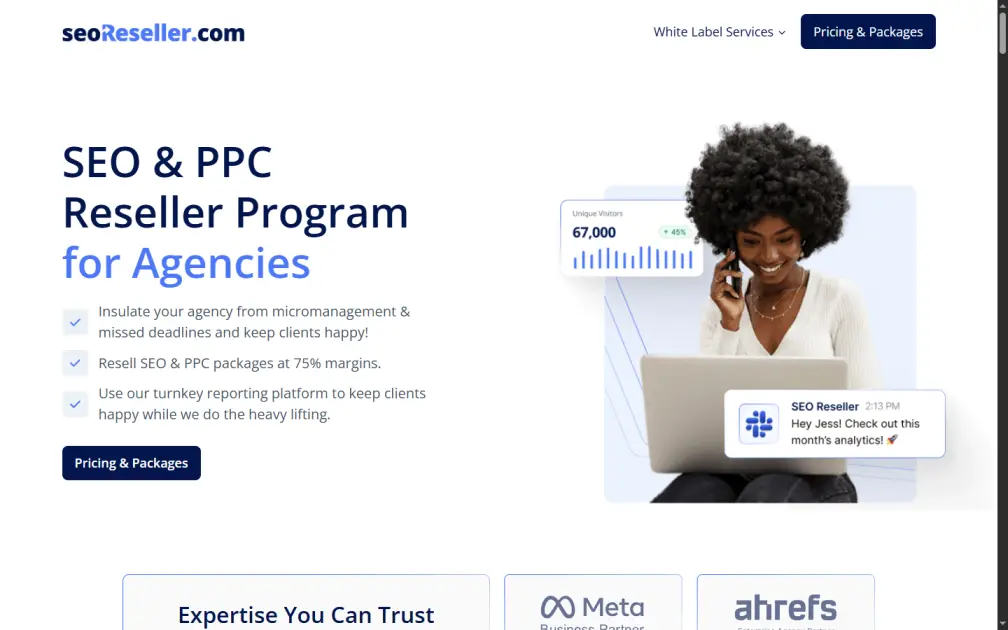
2. SEOReseller
Overview: Based in California with global delivery operations, SEOReseller is purpose-built for agency owners who want turnkey marketing packages paired with an enterprise-grade client portal.
How It Works: Once an agency registers, they receive access to an automated, fully rebrandable dashboard. You select turnkey tiered packages (Bronze, Silver, Gold) across organic search, local optimization, or link building. Their backend team handles technical optimization, tracking, and content distribution.
Pricing & Minimums: Package retainers begin at roughly 800 per month per client campaign, providing clear margins when resold at standard agency rates of 2,500.
Reputation & Feedback: Widely regarded as having one of the best white-label dashboard experiences. Some users report that strategy updates can feel rigid due to their standardized package workflows.
- Pros: Outstanding white-label reporting interface; turnkey sales proposals; integrated CRM functionality.
- Cons: Standardized workflows leave less room for bespoke, unconventional campaign strategies.
- Best For: Agencies looking for a streamlined, packaged fulfillment system with minimal account management.
3. FATJOE
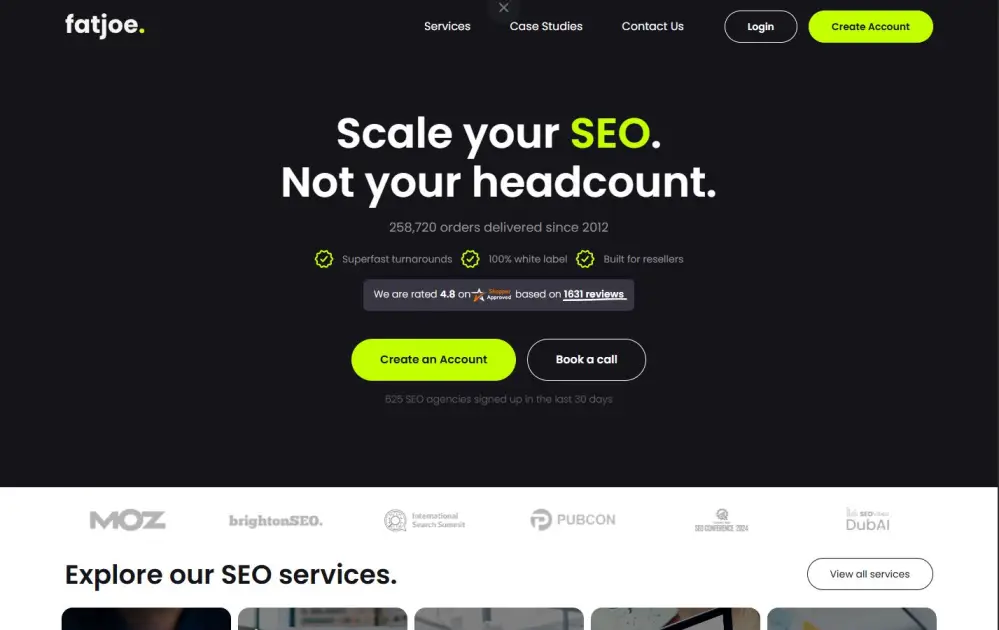
Overview: Founded in 2012 in the United Kingdom, FATJOE has grown into a premier off-page SEO and link-building provider, supporting over 5,000 digital agencies globally.
How It Works: Operating strictly as an on-demand, unbranded fulfillment engine, FATJOE enables agencies to order blogger outreach placements, digital PR campaigns, infographic design, and long-form copywriting through a simple customer portal.
Pricing & Minimums: There are no recurring monthly contracts or minimum spends. Domain Authority (DA) link outreach placements range from 350 per placement depending on target metrics.
Reputation & Feedback: Widely praised on Trustpilot (4.7/5) for quick turnarounds and transparent deliverable tracking. Agencies note that while their outreach fulfillment is exceptional, they do not offer managed, end-to-end SEO retainers.
- Pros: No monthly commitments; transparent link metrics; reliable fulfillment delivery times.
- Cons: Does not provide full-service managed campaigns or direct client communication.
- Best For: In-house agency teams looking to outsource time-intensive link outreach and content creation.
4. Boostability
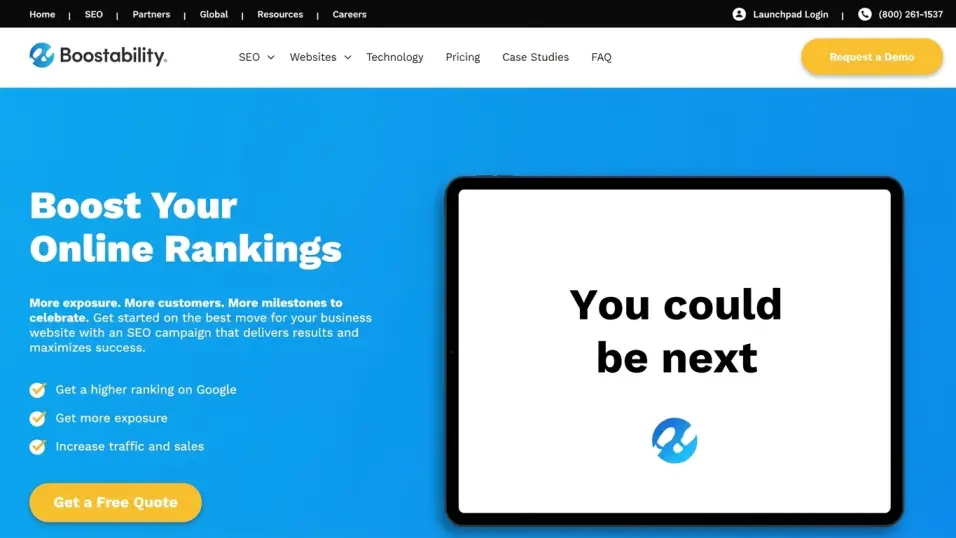
Overview: Headquartered in Utah, Boostability is a global fulfillment powerhouse specializing in small-to-medium enterprise (SMB) search optimization, having supported over 50,000 businesses worldwide.
How It Works: Boostability powers the SEO departments of some of the world's largest web hosts, digital directories, and regional agencies. Their proprietary LaunchPad platform guides campaign tasks, workflow scheduling, and automated performance tracking.
Pricing & Minimums: Wholesale plans typically begin around 600 per month, designed specifically to allow agencies to serve budget-conscious local businesses profitably.
Reputation & Feedback: Recognized on Clutch for its ability to scale high campaign volumes efficiently. However, bespoke enterprise brands may find their templated deliverables less suited for complex sites.
- Pros: High scalability for hundreds of accounts; cost-effective SMB entry pricing; established history.
- Cons: Less flexibility for custom, non-standard digital strategies.
- Best For: High-volume agencies serving local trades, storefronts, and neighborhood businesses.
5. DashClicks
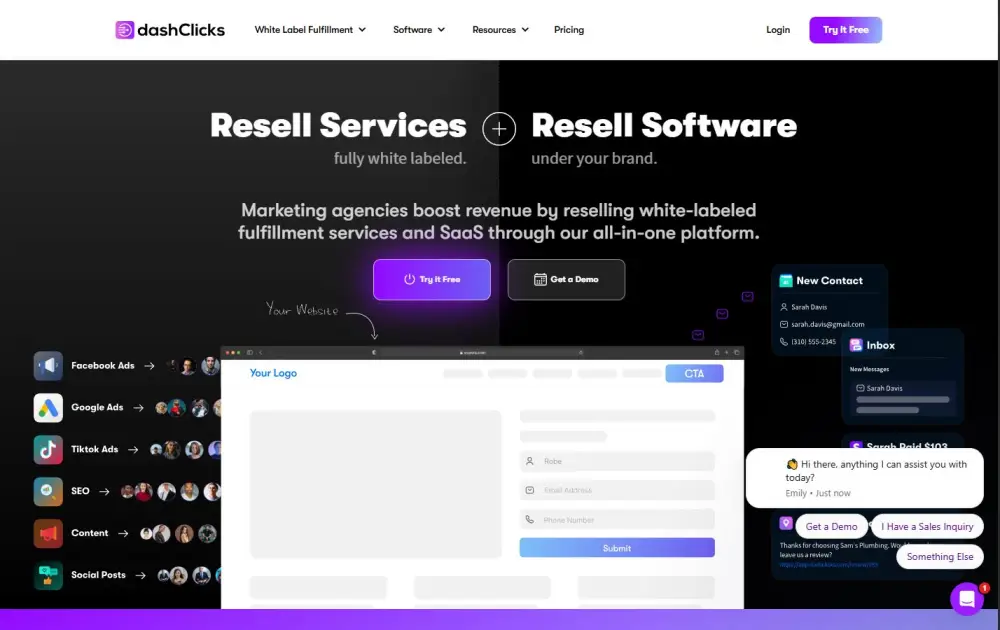
Overview: Based in Fort Lauderdale, Florida, DashClicks provides a unified SaaS ecosystem combining agency management software with on-demand digital fulfillment services.
How It Works: DashClicks acts as an operating system for agencies. Inside their platform, you can access CRM tools, automated client onboarding, and marketing funnels, while instantly ordering white-label SEO fulfillment across on-page, off-page, and technical optimization.
Pricing & Minimums: Platform access is available via freemium and paid software tiers (399/mo), with wholesale SEO service packages starting around 700 per client monthly.
Reputation & Feedback: Agencies appreciate managing both their operational software and fulfillment orders inside one tab. Some reviewers mention that fulfillment turnaround speeds vary depending on overall ticket queue volume.
- Pros: Complete agency software suite included; slick client onboarding flows; transparent status updates.
- Cons: Subscription required to access the lowest wholesale service tiers.
- Best For: Startup agencies wanting an all-in-one platform for CRM, client portals, and search fulfillment.
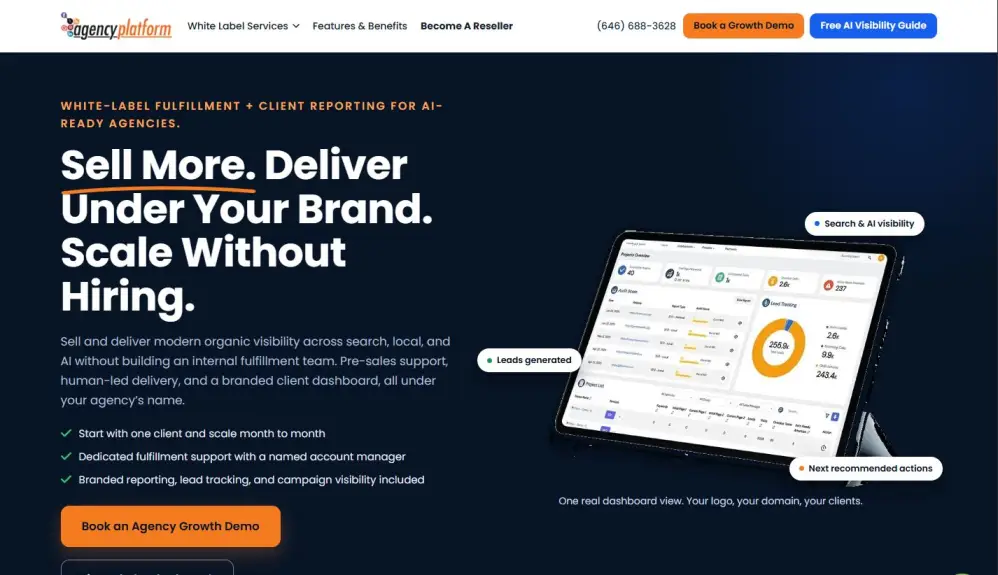
6. AgencyPlatform
Overview: Operating for more than two decades, AgencyPlatform has executed over 150,000 campaigns for a global network of marketing agencies.
How It Works: AgencyPlatform delivers comprehensive white-label campaigns covering technical optimization, link acquisition, content production, and local citations. They provide extensive white-label assets, including sales decks, pre-audit generators, and interactive client dashboards.
Pricing & Minimums: Retainers start at a budget-friendly wholesale price of around 350 per month, making it accessible for newer agencies.
Reputation & Feedback: Highly rated for client retention tools and detailed white-label assets. However, the software interface looks utilitarian compared to modern SaaS dashboards.
- Pros: Low wholesale starting rates; robust unbranded sales collateral; dedicated account contacts.
- Cons: Dashboard interface looks dated compared to modern web design standards.
- Best For: Agencies prioritizing healthy gross margins on small-business marketing packages.
7. Vendasta
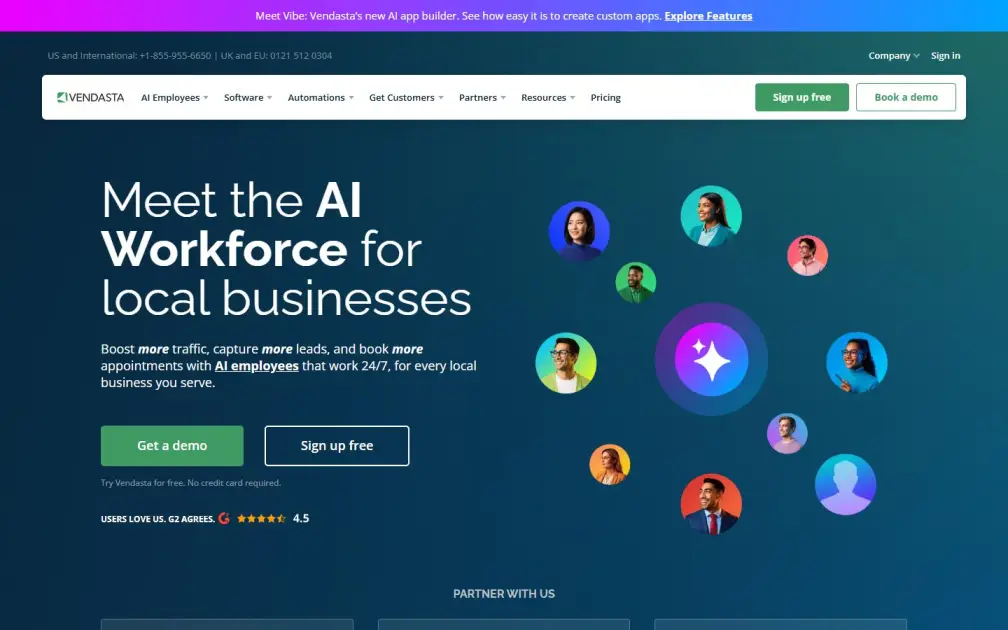
Overview: Vendasta is a premier platform for channel partners and agencies that serve local businesses, offering a comprehensive digital marketplace.
How It Works: Rather than simply acting as an outsourced vendor, Vendasta combines an enterprise white label marketplace with an integrated CRM and billing software. Agencies can purchase managed search retainers from their fulfillment center while reselling local listings software directly to clients.
Pricing & Minimums: Requires an agency software subscription starting around 499 monthly, with wholesale fulfillment retainers billed on top based on chosen scope.
Reputation & Feedback: Regarded as an industry standard for multi-product agencies selling to local enterprises. The platform features an extensive feature set that can require a steep onboarding learning curve.
- Pros: Expansive catalog including reviews, social, and web design; automated client upgrade triggers.
- Cons: Steeper software learning curve; requires an active software subscription.
- Best For: Established regional marketing companies selling multi-product digital suites to local merchants.
8. Stan Ventures
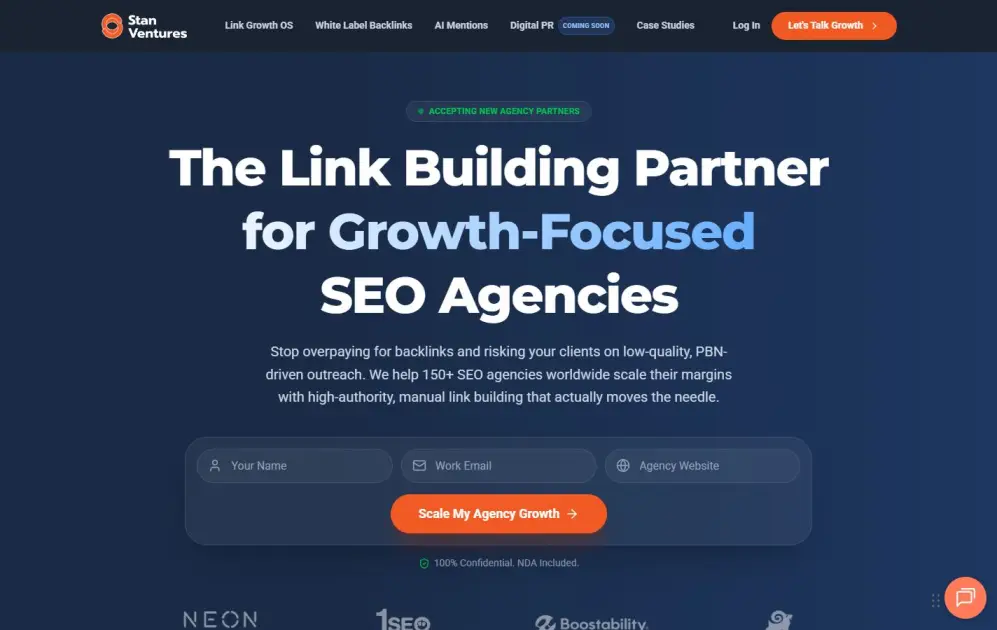
Overview: Stan Ventures pairs an Indo-American delivery model with over a decade of hands-on link outreach and search campaign execution.
How It Works: They specialize in manual blogger outreach, contextual backlink building, and fully managed organic search retainers. Their team works via direct partner managers who build customized link-building schedules for agency clients.
Pricing & Minimums: Individual contextual link placements start around 120 each, while fully managed monthly SEO retainers range from 1,200 per client.
Reputation & Feedback: Well known for aggressive pricing on real-site outreach. Some reviewers note that content style should be vetted early on to ensure it matches specific brand voices.
- Pros: Highly competitive pricing; manual blogger outreach on real websites; responsive dedicated managers.
- Cons: Turnaround times for niche placements can fluctuate during peak periods.
- Best For: Growth-stage agencies seeking cost-effective backlink acquisition and content services.
9. Loganix
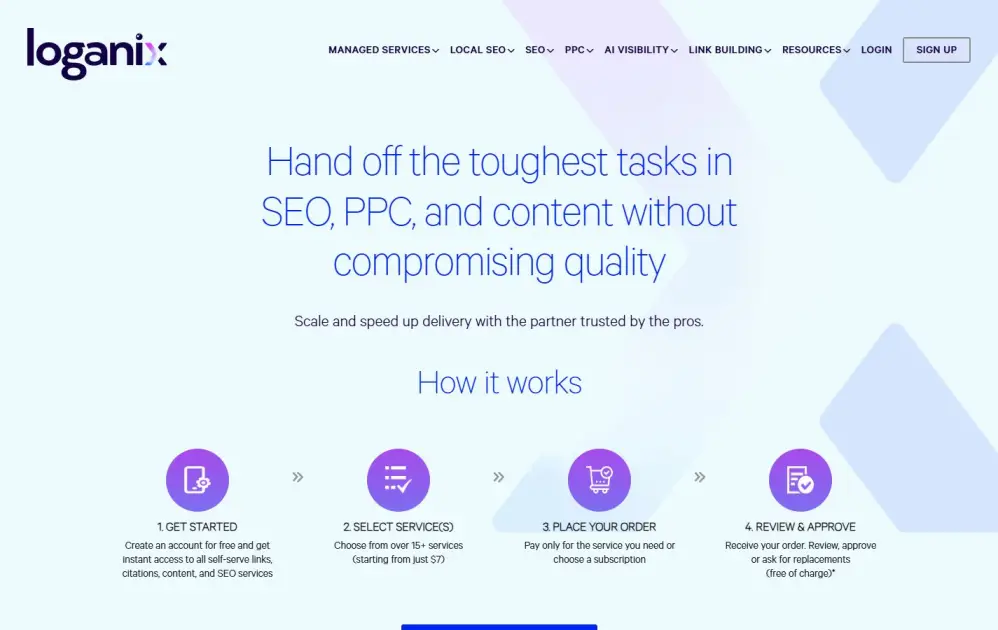
Overview: Based in Vancouver, Loganix is widely known for exceptional data transparency, technical accuracy, and premium quality standards across links and local citations.
How It Works: Loganix offers a modular platform where agencies can order specific deliverables, including citation audits, guest placements, technical site fixes, and copy. Deliverables are tracked inside a clean, unbranded dashboard that provides live placement URLs and metric screenshots.
Pricing & Minimums: Sits at the premium end of the market. High-authority editorial links range from 450+, while local citation cleanups start around $75.
Reputation & Feedback: Highly respected among seasoned SEO professionals for its strict domain curation and zero-fluff reporting. Premium wholesale pricing leaves less room for markup unless you serve enterprise budgets.
- Pros: Rigorous quality control; transparent placement tracking; pristine backlink vetting.
- Cons: Higher wholesale pricing requires pitching larger client retainers to maintain strong margins.
- Best For: Boutique and enterprise agencies where quality and site safety outweigh budget pricing.
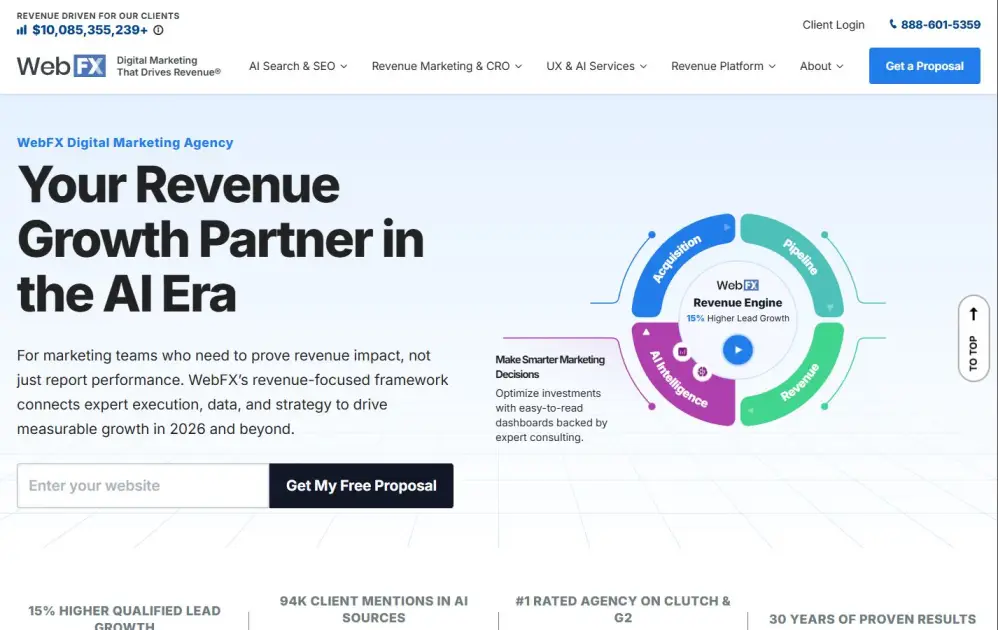
10. WebFX
Overview: Located in Pennsylvania, WebFX is an elite digital marketing agency that also runs an exclusive white-label partner program powered by their proprietary MarketingCloudFX platform.
How It Works: WebFX delivers full-funnel search campaigns backed by deep data modeling, machine learning, and enterprise technical resources. They assign dedicated campaign strategists who execute comprehensive technical, content, and conversion optimization.
Pricing & Minimums: Higher than typical reseller options. Retainers generally start at 3,000+ per month, targeting substantial client engagements.
Reputation & Feedback: Exceptional track record for driving measurable revenue and ROI metrics. The main hurdle for many agencies is the premium wholesale pricing, which limits its use with budget-conscious local accounts.
- Pros: Proprietary marketing technology; enterprise-tier technical talent; proven revenue tracking.
- Cons: High wholesale minimums require pitching high-value retainers.
- Best For: Established agencies pitching mid-market and enterprise accounts that demand advanced revenue attribution.
11. Blogtec
Overview: Operating out of Europe, Blogtec specializes in hands-off organic growth, link building, and content optimization designed specifically for agency fulfillment.
How It Works: Blogtec focuses on search-driven content production and editorial outreach. Agencies integrate Blogtec into their operational stack to receive pre-vetted keyword roadmaps, professionally written and formatted articles, and genuine high-metric backlinks without managing freelance writers.
Pricing & Minimums: Retainer tiers start around 1,500 monthly depending on content volume and link velocity targets.
Reputation & Feedback: High marks for thoughtful European and North American content quality. Because their core strength is content and outreach, advanced technical development fixes often need internal implementation.
- Pros: Well-researched, human-written content; clean white-label deliverable exports; transparent communication.
- Cons: Narrower focus on technical infrastructure and local business optimization.
- Best For: Content marketing agencies and inbound shops looking to scale client content output safely.
12. E2M Solutions
Overview: E2M Solutions is a dedicated white-label partner agency that works exclusively with marketing, web design, and development firms.
How It Works: E2M provides dedicated specialists—such as SEO analysts, WordPress developers, or content writers—who integrate directly into your agency’s Slack channels and project management boards. This creates a flexible, dedicated team without the overhead of direct employment.
Pricing & Minimums: Retainers operate on a flexible monthly model, typically ranging from 2,500 per month for dedicated team capacity.
Reputation & Feedback: Excellent reviews for project management and team integration. Their agency-only model means they never compete with their clients or pursue direct brand contracts.
- Pros: Dedicated resources that learn your agency's workflows; zero risk of client poaching; multi-disciplinary skill sets.
- Cons: Better suited for consistent ongoing client volume rather than one-off, occasional tasks.
- Best For: Mid-size agencies needing dedicated, predictable fulfillment capacity across search and web development.
13. SEO Vendor
Overview: Operating for over two decades, SEO Vendor provides AI-assisted search campaigns and agency fulfillment frameworks designed for rapid scaling.
How It Works: SEO Vendor uses machine-learning models to analyze algorithmic updates, evaluate competitive gaps, and identify ranking risks. Their team pairs these automated insights with manual technical optimization, link placements, and white-label client roadmaps.
Pricing & Minimums: Monthly packages start around 700 per client project, leaving healthy margin headroom for reselling.
Reputation & Feedback: Highly rated for its predictive campaign tools and flexible, contract-free model. Some users report that mastering their proprietary auditing metrics requires an adjustment period.
- Pros: Predictive AI auditing tools; no long-term contracts; built-in agency sales consulting.
- Cons: Custom strategy modifications require close coordination with your designated partner lead.
- Best For: Agencies looking to leverage predictive data models to improve client campaign stability.
14. Posirank
Overview: Posirank provides an adaptable, modular fulfillment engine built to give agencies granular control over every aspect of their campaign spend.
How It Works: Instead of forcing clients into rigid monthly tiers, Posirank uses a flexible digital wallet system. Agencies deposit funds and distribute them across technical fixes, digital PR, editorial outreach, content creation, or on-page optimization as campaign needs evolve.
Pricing & Minimums: Pay-as-you-go flexibility with individual deliverables starting as low as 800+.
Reputation & Feedback: Longstanding industry presence with strong marks for flexibility. The wide variety of tactical options can feel overwhelming for non-technical account managers who prefer standardized packages.
- Pros: Granular budgeting control; pay-as-you-go architecture; transparent deliverable tracking.
- Cons: Requires a knowledgeable internal strategist to allocate monthly budget efficiently.
- Best For: Experienced search agencies wanting to pick and choose specific fulfillment components dynamically.
15. BrightLocal
Overview: Headquartered in the UK, BrightLocal is the gold standard in local search auditing, review management, and citation building software for multi-location brands and agencies.
How It Works: While primarily known as a premier SaaS platform, BrightLocal operates an elite manual citation fulfillment service. Agencies use their software to monitor local geo-rankings, audit local listings, and track reviews, while their operations team manually builds and cleans up directory listings worldwide.
Pricing & Minimums: Software plans run from 79/mo with full white-label reporting. Manual citation submissions cost around 3 per site with zero recurring fee obligations.
Reputation & Feedback: Industry-leading reputation for local search data accuracy and manual citation hygiene. Note that BrightLocal focuses specifically on local signals rather than full-service on-page or backlink campaigns.
- Pros: Complete ownership of citation profiles; accurate local geo-grid tracking; low-cost manual submissions.
- Cons: Dedicated exclusively to local search; does not provide traditional backlink outreach or technical development.
- Best For: Agencies managing brick-and-mortar storefronts, professional practices, and multi-location franchises.
Master Provider Comparison Matrix
| Provider | Primary Delivery Model | Starting Monthly Cost | White Label Portal? | Standout Specialty |
|---|---|---|---|---|
| The HOTH | Marketplace & Managed | ~100 (Modular) | Yes | Comprehensive catalog of modular SEO products |
| SEOReseller | Turnkey Packages | ~$450 / client | Yes (Interactive) | Integrated agency CRM and turnkey sales proposals |
| FATJOE | On-Demand Marketplace | Pay-as-you-go (From $65) | Limited (Order portal) | Rapid-turnaround link outreach and digital PR |
| Boostability | High-Volume SMB | ~$300 / client | Yes | Cost-effective local optimization for small businesses |
| DashClicks | SaaS + Fulfillment | ~$300 / client + software | Yes | All-in-one agency operating system with integrated CRM |
| AgencyPlatform | Turnkey Reseller | ~$180 / client | Yes | Budget-friendly pricing with extensive sales collateral |
| Vendasta | Marketplace + Ecosystem | ~$99 platform + fulfillment | Yes | Multi-product digital sales for local business agencies |
| Stan Ventures | Managed & Outreach | ~$400 / client | Yes | Affordable manual blogger outreach on real domains |
| Loganix | Premium Modular | Pay-as-you-go (From $75) | Yes | Strict vetting and transparent backlink tracking |
| WebFX | Managed Enterprise | ~$1,500 / client | Yes (MarketingCloudFX) | Advanced machine-learning revenue attribution |
| Blogtec | Content & Outreach | ~$500 / client | Yes | High-quality European and US content execution |
| E2M Solutions | Dedicated Staffing | ~$1,000 / resource | Direct integration | Dedicated SEO analysts embedded in your workflows |
| SEO Vendor | AI-Assisted Packages | ~$250 / client | Yes | Predictive AI tracking algorithms with no lock-ins |
| Posirank | Dynamic Wallet System | Pay-as-you-go (From $50) | Yes | Granular budget allocation across tactical tasks |
| BrightLocal | Local Software + Citations | 2/citation | Yes | Unmatched local citation cleanup and geo-grid tracking |
A mid-sized design agency added $18,000 in monthly recurring revenue (MRR) over six months by offering local search retainers alongside new site builds. By outsourcing technical audits and citation setups to a dedicated fulfillment partner, they maintained a 62% gross margin without hiring additional full-time staff.
How to Package, Price, and Resell SEO for Maximum Margins
Reselling search services successfully requires packaging tactical deliverables into distinct client outcomes. Avoid selling "10 backlinks and 2 articles per month." Clients cancel when they view deliverables as commoditized line items.
Instead, structure your offerings into strategic outcome tiers:
- **The Regional Foundation Package (500/month).
- **The Organic Growth Engine (1,000/month).
- **The National Authority Suite (1,800/month).
Understanding how to position these services and set your initial pricing prevents undercharging and safeguards your account profitability as your roster grows.
Protecting Client Retention During Onboarding
The most vulnerable period for any new organic search client is the initial 90-day window. Because organic growth takes time to move revenue needles, you must deliver clear leading indicators early.
During Month 1, focus reporting on completed operational milestones: fixing indexation errors, submitting updated sitemaps, cleaning up broken links, and establishing a unified topical architecture. Use automated white-label dashboards to show work completed in real time. Demonstrating visible operational velocity builds trust before organic traffic gains begin to compound.
- White label search partnerships eliminate fixed payroll risk, enabling agencies to capture 50% to 65% gross margins on monthly retainers.
- Choose a delivery model that fits your operational capacity, whether that means completely anonymous backend reselling, on-demand link marketplaces, or embedded team members.
- Avoid vendors selling cheap PBN placements, multi-year contracts, or guaranteed top rankings.
- Package your client offerings around business growth and local market visibility rather than a checklist of individual deliverables.
- Use white-label dashboards to showcase completed work early, keeping clients engaged while long-term search authority builds.
By selecting a dependable fulfillment engine and pairing it with strong client positioning, your agency can capture steady recurring revenue without taking on the operational headaches of building an internal search department from scratch.
Artificial Intelligence
Intelligence without limits.
We believe great content deserves honest authorship—even when it's AI.
Frequently Asked Questions
For agencies serving local businesses, BrightLocal offers the most comprehensive local tracking software combined with manual, high-accuracy citation cleanups. If you prefer turnkey, fully managed monthly packages that include Google Business Profile updates alongside citation building, Boostability and AgencyPlatform deliver reliable, cost-effective fulfillment tailored specifically to local service companies.
No, provided you work with a legitimate white label provider that operates under strict non-disclosure terms. Quality providers strip their own branding from reports, audit decks, and communication portals, replacing them with your agency's logo, domain, and colors. Even implementation work on client CMS sites is handled through unbranded manager accounts or provided as implementation documents for your internal staff to publish.
Most successful agencies maintain gross margins between 50% and 65%. For example, an agency purchasing a comprehensive wholesale fulfillment package for $1,000 per month will typically package and price that service between $2,500 and $3,000 to the client, providing sufficient margin to cover account management and sales acquisition.
Most modern fulfillment platforms enable onboarding within 24 to 48 hours. Once you enter your client's target keywords, competitor domains, and analytics access into the partner portal, initial technical audits and keyword roadmaps are typically delivered within 5 to 10 business days.
Yes, but it requires careful coordination. Because you own the client relationship, analytics accounts, and direct website access, you can transition backend operations by having the new provider audit the existing roadmap, map out outstanding link acquisition goals, and align reporting schedules so that client deliverables continue without interruption.
While the terms are often used interchangeably, white label services typically involve reselling a standardized, pre-packaged solution provided by a vendor under your brand. Private label SEO usually refers to an arrangement where the provider develops a completely custom, bespoke operational methodology that is tailored exclusively to your agency's unique proprietary framework.